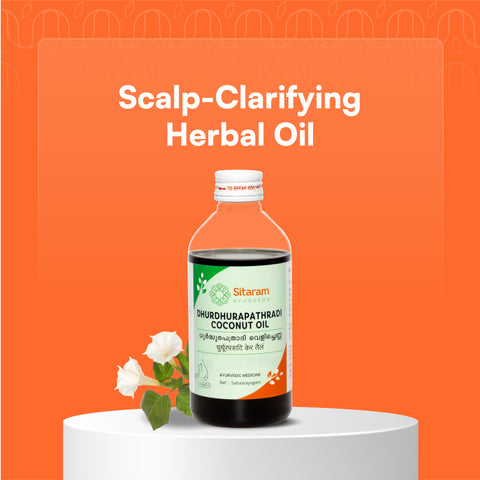
Neelibhringadi Oil is a traditional Ayurvedic hair-care formulation made with herbs such as Neeli, Bhringaraja and Amla in an oil base. It is traditionally used to nourish the scalp, support stronger-looking hair, and care for dryness, hair fall, and premature greying concerns. Its ingredients give the formulation its distinctive Ayurvedic character.
Neelibhringadi Oil is a traditional Ayurvedic hair formulation prepared with Neeli, Bhringaraja and Amla in a nourishing oil base. It is used to support scalp nourishment, healthy-looking hair and concerns such as dryness and hair fall. Sitaram Ayurveda offers coconut and sesame bases. The story behind this formulation goes deeper.
What Is Neelibhringadi Oil?
Neelibhringadi Oil is an Ayurvedic hair oil built around herbs traditionally associated with scalp and hair care. Its name reflects two of its best-known botanicals, Neeli and Bhringaraja, while Amla and other ingredients complement the formulation.
Unlike a single-ingredient hair oil, this preparation combines several botanicals with an oil base. Ayurveda traditionally considers scalp nourishment, oiling practices, and individual constitution together.
Ayurvedic Origin of Neelibringadi Hair Oil
Ayurvedic oiling is a traditional self-care practice focused on scalp nourishment. Neelibhringadi formulations combine herbs, nourishing liquids, and an oil base through an Ayurvedic preparation process.
Sitaram Ayurveda describes its coconut-oil version as cooling and Pitta-pacifying, while its sesame base is positioned for dry winter months. These concepts are not medical diagnosis or treatment; persistent hair loss or scalp symptoms may need individual assessment.
Neelibhringadi Oil Ingredients
Sitaram Ayurveda's formulation combines herbs, milk-based ingredients, and an oil base. Key ingredients include:
Neeli (Indigofera tinctoria)
Neeli is traditionally used in Ayurvedic hair preparations and is associated with maintaining naturally dark-looking hair.
Bhringaraja (Eclipta alba)
Often associated with traditional hair care, Bhringaraja is included in Ayurvedic formulations intended to nourish the scalp and support strong, healthy-looking hair.
Dhatri or Amla (Emblica officinalis)
Amla is one of Ayurveda's familiar ingredients for hair and scalp preparations. It is traditionally valued for its nourishing and rejuvenating qualities.
Yashtimadhu and Satakrutha Latha
Yashtimadhu and Satakrutha Latha add further botanical diversity, reflecting Ayurveda's practice of combining herbs rather than relying on one ingredient alone.
Gunja
Gunja (Abrus precatorius) is classified as an Upavisha, or potent/toxic substance, in Ayurveda. It should never be used as a raw home remedy. Its presence in a professionally prepared formulation is not a reason to experiment with the raw plant.
Milk Ingredients and Coconut Oil
The formulation also contains goat's milk, buffalo's milk, cow's milk and coconut-derived ingredients, along with coconut oil. The oil base carries the herbal preparation and adds nourishing, conditioning qualities.
Neelibhringadi Oil Benefits for Hair and Scalp
These are traditional hair-care benefits, not guaranteed medical outcomes.
Supports Hair and Scalp Nourishment
Bhringaraja, Amla, Neeli and the oil base are traditionally used to nourish the scalp and hair roots.
Helps With Dryness
Regular oiling can help hair feel softer and more conditioned while supporting a comfortable, moisturised scalp. Using a specialized anti dandruff hair oil or a coconut-based version is described by Sitaram Ayurveda as cooling and nourishing.
Supports Hair Fall Care
Hair fall can result from several factors, including genetics, nutrition, hormones, stress and scalp health. An Ayurvedic hair oil may support the care routine, but it should not be treated as a universal solution for hair loss.
Supports Natural-Looking Hair Colour
Neeli is traditionally associated with darker-looking hair and is therefore relevant to premature-greying concerns. However, established grey hair should not be expected to permanently return to its original colour through oiling alone.
Supports a Healthy-Looking Scalp
Gentle massage and regular oiling can form a simple scalp-care ritual, while coconut oil's traditionally cooling quality may suit those who prefer a soothing routine.
How to Use Neelibhringadi Oil
Following proper hair care steps and adhering to the standard procedure of hair care ensures a simple, consistent routine that is more practical than using a large quantity occasionally:
-
Warm a sufficient quantity gently.
-
Apply it to the scalp and hair.
-
Massage the scalp softly with your fingertips.
-
Leave it on for at least 30 minutes or overnight.
-
Wash with a gentle shampoo.
Sitaram Ayurveda states that its coconut-oil recipe can be used regularly, including daily use for adolescents and adults. Frequency can depend on scalp type and personal needs.
Coconut or Sesame Base: Which One Should You Choose?
Sitaram Ayurveda offers the formulation in coconut and sesame oil bases. The coconut version is described as more cooling and Pitta-pacifying, while the sesame version is positioned for dry winter months.
Choice depends on routine, season, and individual Ayurvedic considerations when deciding which hair oil is best for hair growth. If unsure, professional guidance is preferable.
Who Can Use It?
Sitaram Ayurveda recommends its coconut-based preparation for adolescents and adults, including men and women. It can fit routines focused on scalp nourishment, dryness and hair texture. Persistent hair loss or unexplained scalp changes warrant professional assessment.
Precautions to Remember
Patch-test if you have sensitive skin, avoid eye contact, and follow the manufacturer's directions. Because of its cooling nature, individuals experiencing joint issues should take care or opt for an ayurvedic pain relief oil or pain relief oil for body concerns. Never prepare or apply raw Gunja as a home remedy. If irritation occurs, stop use and seek advice.
Hair oil can support grooming and scalp care, but it is not a substitute for diagnosis when an underlying condition is suspected.
Explore Sitaram Ayurveda's Neelibhringadi Hair Oil
If you want to include traditional Ayurvedic oiling in your hair-care routine, explore Sitaram Ayurveda's Neelibhringadi Hair Oil, formulated with Neeli, Bhringaraja, Amla and other Ayurvedic ingredients. Choose the oil base that suits your needs, or seek Ayurvedic guidance for a more personalised approach.
Explore Sitaram Ayurveda's Neelibhringadi Hair Oil
Frequently Asked Questions
Q1. How should Neelibringadi Hair Oil be applied?
Warm a suitable quantity, massage it gently into the scalp and hair, leave it for at least 30 minutes or overnight, then wash with a gentle shampoo.
Q2. Can Neelibringadi Hair Oil help with hair fall?
It can support a nourishing hair-care routine, but persistent hair fall may have an underlying cause and should be assessed.
Q3. Is Neelibringadi Hair Oil suitable for a dry scalp?
Its nourishing oil base can suit a dry-feeling scalp, and Sitaram Ayurveda describes the coconut-based formulation as cooling.
Q4. Will Neelibringadi Hair Oil reverse premature greying?
No topical oil should be presented as a guaranteed treatment. Neeli is traditionally associated with darker-looking hair, but greying has several possible causes.
Q5. What are the main Neelibhringadi Oil benefits?
Traditionally, it is used to nourish the scalp, support stronger-looking hair, moisturise dry-feeling hair and maintain natural-looking hair colour.
Q6. Why is Bhringaraja included in Neelibringadi Hair Oil?
Bhringaraja has a long history in Ayurvedic hair-care preparations and is traditionally associated with scalp nourishment and healthy-looking hair.
Q7. How does the coconut base differ in Neelibringadi Hair Oil?
The coconut base is described as more cooling and Pitta-pacifying, while the sesame base is positioned for dry winter months.
Q8. How long should Neelibringadi Hair Oil stay on the hair?
Sitaram Ayurveda recommends leaving its coconut-based preparation on for at least 30 minutes or overnight before washing. Those with sensitive scalps may prefer starting with a shorter duration.