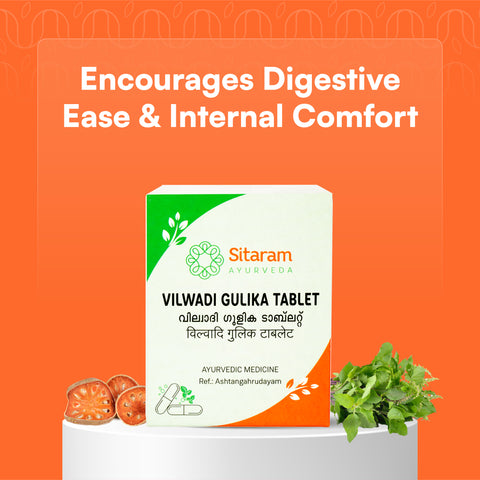
Vilwadi Gulika uses in Ayurveda traditionally include addressing insect bites and stings, certain digestive complaints, and allergic reactions. This multi-herb formulation contains ingredients such as Vilwa, Tulasi, Pippali, Maricha, and Shunti. Its suitability depends on individual health needs and the exact formulation. Traditional uses do not replace evidence-based medical care or emergency treatment.
Vilwadi Gulika is a classical Ayurvedic herbal formulation associated with traditional toxicology and digestive care. At Sitaram Ayurveda, we recognise the importance of understanding an herbal preparation's traditional purpose, ingredients, and safe use before considering it. But what is this formulation traditionally used for, how is it taken, and what precautions should you know? Let's explore.
What Is Vilwadi Gulika?
Vilwadi Gulika is a traditional Ayurvedic formulation prepared in pill or tablet form using a combination of herbs. In Ayurveda, Gulika refers to a solid dosage form made by processing medicinal ingredients into convenient pills.
The formulation is traditionally associated with Vishachikitsa, the branch of Ayurveda concerned with poisons and toxic exposures. It is also described in relation to certain digestive complaints and reactions associated with insect bites and stings.
Sitaram Ayurveda offers Vilwadi Gulika Tablets in a pack of 60. The formulation includes several herbs traditionally valued in Ayurvedic practice, including Indian bael, holy basil, ginger, black pepper, and turmeric.
Although traditional texts and practices provide historical context, they should not be confused with modern clinical evidence. The effectiveness and safety of a finished herbal product depend on its composition, preparation, quality, and the circumstances in which it is used.
What Are the Main Vilwadi Gulika Uses?
The traditional applications of Vilwadi Gulika cover several areas of Ayurvedic practice. Understanding these uses requires distinguishing between traditional indications and benefits established through reliable clinical research.
1. Traditional Use for Insect Bites and Stings
One of the recognised traditional applications of Vilwadi Gulika is its use in the context of insect bites and stings. In Ayurvedic practice, formulations associated with Vishachikitsa have historically been used in approaches to toxic exposures.
However, an insect bite can cause anything from mild local irritation to a serious allergic reaction. A suspected venomous bite or sting requires appropriate medical assessment. Severe pain, rapidly increasing swelling, breathing difficulty, dizziness, or swelling of the throat or tongue should never be managed with an herbal tablet alone.
Vilwadi Gulika should not be considered a proven antidote for venom or a replacement for emergency treatment. Discover ayurvedic medicine for digestion to learn about traditional Ayurvedic formulations that may support digestive health under qualified professional guidance.
2. Traditional Support for Digestive Complaints
Digestive discomfort is another area associated with Vilwadi Gulika uses in traditional Ayurvedic practice. The formulation contains herbs such as ginger, black pepper, and long pepper, which have established roles in traditional digestive preparations.
People may explore Ayurvedic approaches when experiencing indigestion, stomach discomfort, vomiting, or loose stools. However, these symptoms can arise from many causes, including infections, foodborne illness, medication effects, and underlying medical conditions.
It is important not to assume that a traditional formulation will treat the cause of a digestive problem. Persistent vomiting, severe abdominal pain, blood in the stool, high fever, or signs of dehydration require medical attention.
3. Traditional Use in Certain Allergic Reactions
Traditional descriptions also associate Vilwadi Gulika with allergic reactions. Yet, allergies vary considerably in severity, and there is insufficient basis to treat this formulation as a clinically established allergy medicine.
Mild skin irritation and a severe systemic allergic reaction are not the same condition. Difficulty breathing, throat tightness, faintness, or sudden swelling of the lips or tongue may indicate anaphylaxis, which requires immediate emergency care.
Never delay prescribed emergency treatment while trying an Ayurvedic remedy.
4. Traditional Approaches to Dosha Balance
Ayurvedic practice understands health through concepts such as Vata, Pitta, and Kapha. Vilwadi Gulika is traditionally described in relation to balancing Vata and Kapha and addressing the Ayurvedic concept of Ama, often understood as incompletely processed or accumulated material within the body's traditional explanatory framework.
These concepts belong to the Ayurvedic system of medicine. They should not automatically be equated with biomedical diagnoses, toxins identified through laboratory testing, or clinically demonstrated detoxification.
Vilwadi Gulika Tablet Uses: What Should You Know?
Vilwadi Gulika tablet uses generally refer to the traditional applications of the same type of formulation in a tablet or pill form. The exact indications and instructions can vary by manufacturer and preparation, so the product label matters.
Before considering a Vilwadi tablet, keep these points in mind:
-
Check the formulation: Confirm the ingredients and manufacturer's details rather than assuming every product is identical.
-
Understand the intended use: Traditional indications are not a guarantee of effectiveness for a particular symptom or condition.
-
Follow professional guidance: The appropriate approach depends on your age, health history, symptoms, and other medicines.
-
Recognise medical emergencies: Herbal preparations must never delay urgent treatment for poisoning, venomous bites, or severe allergic reactions.
A convenient tablet format does not automatically make a medicine suitable for everyone. Individual assessment remains important. Explore ayurvedic treatment for digestion to learn about traditional Ayurvedic approaches, dietary habits, and lifestyle practices that support digestive wellness.
What Are the Ingredients in Vilwadi Gulika?
The Sitaram Ayurveda formulation lists a combination of herbs used in traditional Ayurvedic preparations. Each ingredient has its own history of use, but the presence of an herb does not independently prove that the complete formulation treats a particular condition.
Key Ingredients and Their Traditional Roles
-
Vilwa (Aegle marmelos): Also known as bael, this plant has a long history in Ayurveda, particularly in traditional digestive preparations.
-
Tulasi (Ocimum sanctum): Commonly known as holy basil, Tulasi is valued in traditional Ayurvedic practice.
-
Pippali (Piper longum): Long pepper is traditionally used in formulations associated with digestion and respiratory health.
-
Maricha (Piper nigrum): Black pepper is used in traditional preparations for digestive complaints.
-
Shunti (Zingiber officinale): Dried ginger has a long history of use in traditional approaches to digestive discomfort.
-
Haritaki, Amalaki, and Vibhitaki: These three herbs are associated with Triphala, a well-known combination in Ayurveda.
-
Haridra and Daruharidra: These are distinct botanical ingredients used in traditional formulations.
-
Thagara and Devadaru: These herbs also appear in the formulation's listed ingredient profile.
Other ingredients may contribute to the preparation's overall traditional properties. Always consult the current product label for the complete composition and any relevant ingredient warnings. Discover ayurvedic immunity booster options to learn about traditional Ayurvedic herbs and lifestyle practices that support immune health and overall well-being.
How Should Vilwadi Gulika Be Taken?
Vilwadi Gulika should be taken only according to the instructions applicable to the specific product and the guidance of a qualified healthcare professional.
The Sitaram Ayurveda product page lists the following dosage guidance:
-
Adults: One to two tablets twice daily, with a suitable adjuvant as advised by a physician.
-
Children: Half to one tablet twice daily, with a suitable adjuvant as advised by a physician.
These are the manufacturer's listed instructions, not a universal prescription for every person or condition. Do not independently determine a child's dosage or use the formulation to manage a potentially serious illness.
An adjuvant is a substance taken alongside a preparation to support its administration within a traditional treatment approach. The appropriate adjuvant and regimen should be confirmed with the prescribing practitioner.
If you miss a dose, experience an unexpected reaction, or are already taking medication, ask your healthcare professional what to do rather than adjusting the regimen yourself.
Vilwadi Gulika Side Effects and Safety Precautions
Herbal medicines can cause unwanted effects, allergies, or interactions with other treatments. Reliable product-specific safety information may also be limited, so it is important not to assume that a traditional formulation is risk-free.
Speak to a qualified healthcare professional before use if you:
-
Are pregnant or breastfeeding.
-
Are considering giving the formulation to a child.
-
Have a chronic medical condition or a known allergy to any ingredient.
-
Take prescription medicines or other herbal supplements.
-
Have persistent, unexplained, or worsening symptoms.
Stop taking the product and seek medical advice if you experience a suspected adverse reaction. Seek emergency care for difficulty breathing, collapse, severe swelling, suspected poisoning, or a potentially venomous bite.
Vilwadi Gulika is not a substitute for emergency treatment, prescribed medicines, or a medically appropriate diagnosis. Its traditional applications should be considered alongside an individual's health circumstances and the available evidence.
Why Consider Sitaram Ayurveda Vilwadi Gulika Tablets?
At Sitaram Ayurveda, our heritage in Ayurvedic healthcare dates to 1921. Our work brings classical Ayurvedic knowledge together with contemporary manufacturing and quality practices.
Our team includes Dr. Vignesh Devraj, BAMS, MD (Ayurveda), Technical Director, and Dr. D. Ramanathan, Managing Director and Chief Physician. Their professional roles reflect the wider Ayurvedic expertise within our organisation; this does not mean they have personally reviewed or prescribed this article's featured formulation.
When evaluating any Ayurvedic product, look beyond its traditional reputation. Review the ingredient list, manufacturer's instructions, product quality information, and suitability for your circumstances.
If you would like to examine the formulation in more detail, visit our official product page for Sitaram Ayurveda Vilwadi Gulika Tablets, 60 Nos. Review the product information and speak with a qualified practitioner before deciding whether it is appropriate for you.
Explore Vilwadi Gulika Tablets from Sitaram Ayurveda
Understanding a traditional formulation begins with knowing its ingredients, intended uses, and limitations. At Sitaram Ayurveda, we encourage informed decisions that respect Ayurvedic knowledge while keeping personal safety at the forefront.
Explore Sitaram Ayurveda Vilwadi Gulika Tablets (60 Nos) to review the product details, listed ingredients, and usage instructions. Consult a qualified practitioner to determine whether this formulation is suitable for your needs.
Explore Sitaram Ayurveda Vilwadi Gulika Tablets
Disclaimer: This article is for general educational purposes and does not replace professional medical advice, diagnosis, or treatment. Consult your doctor or a qualified Ayurvedic practitioner before using any product. Seek emergency medical care for suspected poisoning, venomous bites, or severe allergic reactions.
Frequently Asked Questions
Q1. How should Vilwadi Gulika tablets be taken?
Follow the dosage instructions for the specific product and your qualified practitioner's advice. The appropriate regimen may vary according to age, health status, and the reason for use.
Q2. Can Vilwadi Gulika be used for digestive problems?
It is traditionally associated with certain digestive complaints in Ayurveda. However, its effectiveness for a particular digestive condition is not established simply by traditional use, and persistent symptoms need medical assessment.
Q3. Is Vilwadi Gulika safe for everyone?
No herbal formulation is suitable for everyone. People who are pregnant, breastfeeding, taking medicines, managing chronic conditions, or considering use for a child should seek professional advice first.
Q4. Will Vilwadi Gulika treat an insect bite or sting?
It has traditional associations with insect bites and stings, but it should not be relied on as a proven treatment for venom or serious reactions. Seek urgent medical care for severe symptoms or a suspected venomous bite.
Q5. What are the main ingredients in Vilwadi Gulika?
The formulation includes herbs such as Vilwa, Tulasi, Pippali, Maricha, Shunti, Haritaki, Amalaki, Vibhitaki, Haridra, and other ingredients. Check the specific manufacturer's label for the complete list.
Q6. What are the common Vilwadi tablet uses?
Traditional applications include certain insect bites and stings, digestive complaints, and allergic reactions. These are traditional indications, not a guarantee that the tablets will treat these conditions.
Q7. Why is Vilwadi Gulika associated with Vishachikitsa?
Vishachikitsa is the Ayurvedic discipline concerned with poisons and toxic exposures. Vilwadi Gulika is traditionally associated with this area, but this does not establish it as an effective antidote or replacement for emergency treatment.
Q8. Can Vilwadi Gulika be taken with other medicines?
Do not assume that combining herbal products with prescription medicines is safe. Ask your doctor or qualified Ayurvedic practitioner to assess potential interactions before taking them together.