
Skip to product information



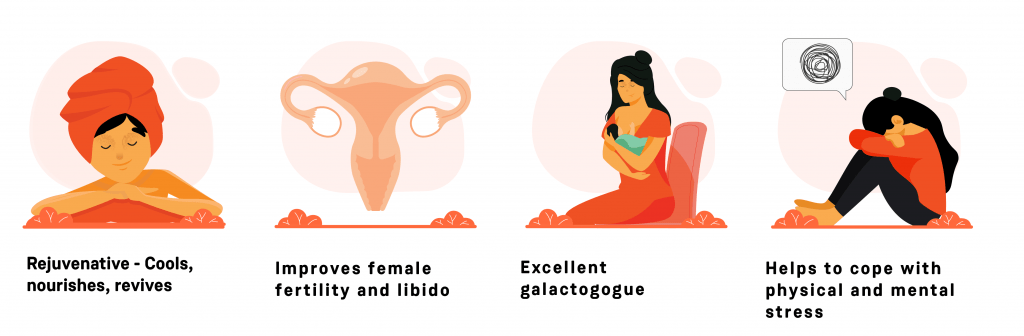 What does Shatavari do for you?
 Vedic wisdom on Shatavari:
Ayurvedic pharmacodynamics
Rasa: Tikta, Madhura
Guna: Guru, Snigdha
Virya: Seeta
Vipaka: Madhura
Karma: Vatapittajit, Medagnipushtida, Shuklasthanyakari, Rasayana, Hrdya
Classical reference from Bhavaprakasa Nighantu -
Vedic wisdom on Shatavari:
Ayurvedic pharmacodynamics
Rasa: Tikta, Madhura
Guna: Guru, Snigdha
Virya: Seeta
Vipaka: Madhura
Karma: Vatapittajit, Medagnipushtida, Shuklasthanyakari, Rasayana, Hrdya
Classical reference from Bhavaprakasa Nighantu -
 Translated as - Shatavari is Guru (heavy), Seeta (cold), Tikta (bitter to taste), Swadu (sweet to taste), Snigdha (unctous) and Rasayana (rejuvenative) in property. It bestows the user with Meda (corpulence), Agni and Pushti. It is Netrya and alleviates Gulma and Atisara. It promotes Shukla and Sthanya, is Balya and mitigates Vata, Raktapitta and Sopha.
Phytoconstituents
The major bioactive constituents of Asparagus are a group of steroidal saponins. This plant also contains Vitamins A, B1, B2, C, E, Mg, P, Ca, Fe, and folic acid. Other primary chemical constituents of Asparagus are essential oils, asparagine, arginine, tyrosine, flavonoids (kaempferol, quercetin, and rutin), resin, and tannin.
Botanical name: Asparagus racemosus
Family: Lilliacea
English name: Wild Asparagus
Hindi name: Shatamuli
Malayalam name: Shatavari
Translated as - Shatavari is Guru (heavy), Seeta (cold), Tikta (bitter to taste), Swadu (sweet to taste), Snigdha (unctous) and Rasayana (rejuvenative) in property. It bestows the user with Meda (corpulence), Agni and Pushti. It is Netrya and alleviates Gulma and Atisara. It promotes Shukla and Sthanya, is Balya and mitigates Vata, Raktapitta and Sopha.
Phytoconstituents
The major bioactive constituents of Asparagus are a group of steroidal saponins. This plant also contains Vitamins A, B1, B2, C, E, Mg, P, Ca, Fe, and folic acid. Other primary chemical constituents of Asparagus are essential oils, asparagine, arginine, tyrosine, flavonoids (kaempferol, quercetin, and rutin), resin, and tannin.
Botanical name: Asparagus racemosus
Family: Lilliacea
English name: Wild Asparagus
Hindi name: Shatamuli
Malayalam name: Shatavari


shatavari capsules | 60 nos
₹220.00

Description
What does Shatavari do for you?
- Shatavari has intense Pitta samana action. Aggravated Pitta wreaks havoc in the female body. It disrupts digestion, menstruation, fertility and mental acuity. Shatavari gets to the root of the problem with its cooling combination of Pitta-samana drugs.
- The herb is adaptogenic. Helps your body cope with physical and mental stress. Its potent anti-oxidant action helps in preventing free radical cell damage.
- Shatavari is an excellent remedy for white discharge in women. Undernourishment, physical exhaustion and mental stress contribute to chronic conditions of leucorrhea associated with fatigue and anorexia. Shatavari tackles the problem in a holistic manner, imparting nourishment, cooling the body and rectifying hormonal dysfunction.
- In the woman debilitated by pregnancy and child-birth, it imparts nourishment and improves lactation. It is an excellent galactagogue.
- It improves fertility and libido in women. Bestows quality of ovum and ensures patency of the reproductive tract.
- Sets metabolism on track. Neutralizes excess heat and acidity in the body.
Vedic wisdom on Shatavari:
Ayurvedic pharmacodynamics
Rasa: Tikta, Madhura
Guna: Guru, Snigdha
Virya: Seeta
Vipaka: Madhura
Karma: Vatapittajit, Medagnipushtida, Shuklasthanyakari, Rasayana, Hrdya
Classical reference from Bhavaprakasa Nighantu -
Translated as - Shatavari is Guru (heavy), Seeta (cold), Tikta (bitter to taste), Swadu (sweet to taste), Snigdha (unctous) and Rasayana (rejuvenative) in property. It bestows the user with Meda (corpulence), Agni and Pushti. It is Netrya and alleviates Gulma and Atisara. It promotes Shukla and Sthanya, is Balya and mitigates Vata, Raktapitta and Sopha.
Phytoconstituents
The major bioactive constituents of Asparagus are a group of steroidal saponins. This plant also contains Vitamins A, B1, B2, C, E, Mg, P, Ca, Fe, and folic acid. Other primary chemical constituents of Asparagus are essential oils, asparagine, arginine, tyrosine, flavonoids (kaempferol, quercetin, and rutin), resin, and tannin.
Botanical name: Asparagus racemosus
Family: Lilliacea
English name: Wild Asparagus
Hindi name: Shatamuli
Malayalam name: Shatavari
Features & Benefits
Dosage and Instructions
Key Ingredients
Pair well with
You may also like
Your Questions, Answered
Are your Ayurvedic medicines authentic and traditionally prepared?
Yes. All our medicines are made following classical Ayurvedic formulations using carefully sourced herbs and prepared under strict quality standards.
Do I need a prescription to purchase these medicines?
Most Ayurvedic medicines can be purchased without a prescription. However, we recommend consulting a qualified Ayurvedic doctor before use for best results.
How long does it take for Ayurvedic medicines to show results?
Ayurveda works by correcting the root cause, so results may take time. Some people notice improvements within weeks, while chronic conditions may require longer use.
Are there any side effects?
When taken as directed, Ayurvedic medicines are generally safe. Always follow dosage instructions and consult a practitioner if you are pregnant, nursing, or on other medications.
How should I store the medicines?
Store medicines in a cool, dry place away from direct sunlight. Keep containers tightly closed and out of reach of children.