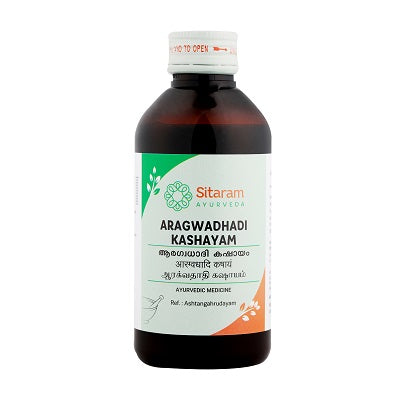
Key Ingredients:
ARAGWADA (Cassia fistula)
Aragwada and its components have been investigated for a number of biological activities such as antiparasitic, antioxidant, antibacterial, antifungal, antitumor, antipyretic, anti-inflammatory, antiulcer, wound + healing, analgesic, hepatoprotective, immunomodulatory, and acetylcholinesterase.
KUTAJA (Hollerhena antidysentrica)
It has a prominent benefit in managing diarrhea and dysentery due to its antimicrobial activity. It is also useful for managing bleeding piles due to its astringent property. Taking Kutaja powder along with water after having light food to manage diarrhea and dysentery. Washing wounds with Kutaja water helps in faster wound healing due to its Ropana (healing) property.
NIMBA (Azardirachta indica)
Nimba is commonly known as Neem tree. Neem is used for various skin diseases, eye disorders, ulcers, gum diseases, and for birth control. It is also used as a mosquito repellent. Neem leaf paste is used as a home remedy for the skin.
GUDUCHI (Tinospora cordifolia)
It is a well-recognized and widely distributed traditional plant that is used successfully in Indian Ayurveda medicine. Guduchi helps increase the effectiveness of protective white blood cells which fight infection. The herb also augments immune responses to infections by influencing various immune effector cells and ensures early recovery. It is effective in Infections in the respiratory system, skin, and soft tissues, Infected wounds, especially in diabetic conditions and immune-compromised conditions.
PATHA (Cyclea peltata)
It is widely used in bone fracture and wound healing. It is also used in the treatment of fever and acts as a breast milk purifier. It is commonly known as Indian Moonseed. It enhances immunity and prevents inflammation of the respiratory passages due to its immunomodulatory and anti-inflammatory properties. It is used in conditions including infertility, wound, hypertension, and skin diseases.
BHUNIMBA (Andrographis paniculata)
With its antibacterial and hepatoprotective property, it is effective in jaundice and liver related diseases. It is also used for the treatment of snake bite, bug bite, diabetes, dysentery, fever, and malaria. The Creat is considered to be one of the most bitter plants used in traditional healthcare. Due to its bitter qualities, it is referred to as Hempedu Bumi, which means ‘Bile of the Earth’. Native to India and Sri Lanka, some cultures call the herb Mahatita, which literally translates to ‘King of Bitters’.
PATOLA (Trichosanthus dioica)
Patola or pointed gourd is recommended in liver disorders. It nourishes the liver and corrects all its functions. It improves the working of the digestive system and helps in maintaining skin health.
CHITHRAKA (Plumbago zeylanica)
Also known as Plumbago zeylanicais, it is a potent digestive medicine used for treating a host of ailments including indigestion, constipation, anorexia, abdominal distension, stomatitis, abdominal pain, etc. Imbued with digestive, caustic, stimulant, and carminative properties, it eliminates harmful ‘Ama’ toxins from the body which have accumulated due to malabsorption of food particles.
MADANA (Randia dumetorum)
Madanaphala, commonly known as Emetic nut is one of the commonly used herbs as anti-inflammatory, antiviral, antifungal, and antibacterial agents. The name Madana means it produces horripilation and discomfort. It is used to treat the common cold, chronic cough, asthma, and bronchitis. It also helps to stimulate our immune system and make our body cells capable to fight against various serious infections. It is also skin protective in nature. In Ayurveda, the fruit is especially used as a medicine for Emesis Therapy (treating by inducing vomiting).