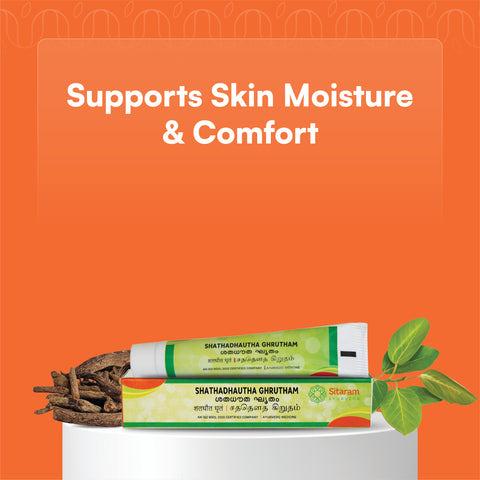
Shathadhaoutha Ghrutham ointment is a traditional Ayurvedic topical preparation used to cool, soothe, and comfort irritated skin. Its traditional applications include minor burns, heat-related skin discomfort, stings and bites, and irritation associated with some acne or rashes. It is meant for external use and should be applied as directed.
When skin feels unusually warm, uncomfortable, or irritated, a soothing topical preparation may help provide relief. Shathadhaoutha Ghrutham is an Ayurvedic formulation with a long-standing traditional use in topical skincare. Its preparation, method of application, and intended uses are rooted in Ayurvedic practice, making it useful to understand how and when it is traditionally applied. This guide explores Shathadhaoutha Ghrutham ointment uses, how to apply it, and important precautions to keep in mind.
What Is Shathadhaoutha Ghrutham?
Shathadhaoutha Ghrutham is a traditional Ayurvedic preparation made through a specialised washing process. “Shatha” means hundred, “dhautha” means washed, and “ghrutham” refers to ghee. The preparation involves repeatedly washing ghee with an herbal decoction, creating a soft topical formulation traditionally valued for its cooling and soothing qualities.
In Ayurveda, this preparation is associated with pitta-pacifying care and is traditionally used when the skin feels hot, irritated, or uncomfortable. Its soft texture also makes it suitable for topical application when the skin needs gentle emollient support.
The preparation process gives the formulation its distinctive identity. It is not simply ordinary kitchen ghee applied to the skin; it undergoes a traditional processing method intended to create a specialised topical preparation.
Explore immunity booster ayurvedic medicine to learn about traditional Ayurvedic approaches for supporting immune health and overall well-being.
Shathadhaoutha Ghrutham Ointment Uses
The primary shathadhaoutha ghrutham ointment uses relate to cooling, soothing, and moisturising the skin. Traditional applications include:
- Minor burns and heat-related skin discomfort
- Burning sensations and warm inflammation
- Irritated skin associated with certain rashes
- Discomfort associated with acne
- Painful stings and insect bites
- Chafed, dry or dull-looking skin
These applications should be understood as traditional Ayurvedic uses. The formulation should not replace medical treatment for serious burns, deep wounds, infections, severe allergic reactions, or persistent skin conditions.
Discover ayurvedic medicine for digestion to learn about traditional approaches that support healthy digestion and gut wellness.
Shathadhaoutha Ghrutham Uses for Burns and Burning Sensation
One of the recognised shathadhaoutha ghrutham uses is topical soothing for minor burns and sensations of heat. Its traditionally cooling nature can provide a comforting feel to skin affected by warmth or irritation.
Serious burns require appropriate medical attention. Deep or extensive burns, chemical or electrical burns, burns affecting sensitive areas, or injuries accompanied by severe pain should be assessed by a healthcare professional rather than managed solely with a topical Ayurvedic preparation.
For minor skin discomfort, the preparation can be used externally according to product directions and appropriate professional guidance.
Explore ayurvedic digestive tablets to understand their role in supporting digestive health as part of a balanced wellness routine.
Shathadhaoutha Ghrutham Uses for Acne and Rashes
Another area of shathadhaoutha ghrutham uses is soothing irritation associated with acne and certain rashes. It can be considered part of traditional skin care when the skin feels warm, irritated, or uncomfortable.
However, it should not be presented as a universal acne treatment. Acne can result from several factors and may require targeted care. Persistent, painful, or widespread acne, particularly when it causes scarring, should be evaluated by a dermatologist or qualified healthcare professional.
The cause of a rash also matters. Allergic reactions, infections, and other underlying conditions may require specific treatment. A soothing topical preparation can support comfort but should not delay professional assessment when symptoms are severe or persistent.
Discover digestive care options to learn about simple approaches for maintaining healthy digestion and overall gut wellness.
Shathadhaoutha Ghrutham Uses for Stings, Bites and Irritated Skin
Traditional shathadhaoutha ghrutham uses also include topical care for painful stings and insect bites. Applying an appropriate amount externally can provide a cooling and soothing sensation to uncomfortable skin.
Medical attention is necessary if a bite or sting causes difficulty breathing, swelling of the lips or throat, dizziness, widespread hives, or other signs of a serious allergic reaction.
The preparation can also be used traditionally for chafed or dry skin. Its ghee-based nature gives it an emollient feel that can help the skin feel softer and more comfortable.
Explore ayurvedic treatment for digestion to learn about traditional Ayurvedic approaches for supporting digestive health and balance.
Key Benefits of Shathadhaoutha Ghrutham
The main shathadhaoutha ghrutham ointment uses are supported by several traditional skin-care qualities:
- Cooling feel: Traditionally associated with a cooling sensation after application.
- Soothing support: Helps provide comfort to skin experiencing warmth or minor irritation.
- Moisturising comfort: Its ghee base gives the skin a soft, emollient feel.
- Traditional topical care: Used externally for several skin-related concerns.
- Versatile application: Traditionally used for minor burns, irritation, stings, bites, and certain rash- or acne-related discomfort.
These benefits describe traditional use and should not be interpreted as guaranteed medical outcomes.
Discover food to increase immunity to explore nutritious food choices that can support immune health as part of a balanced diet.
How to Use Shathadhaoutha Ghrutham Ointment
Using the preparation is straightforward, but application should always follow the product instructions.
-
Gently clean the affected area when appropriate.
-
Pat the skin dry without excessive rubbing.
-
Apply a quantity sufficient to cover the affected area.
-
Spread it gently over the skin.
-
Follow the product label or guidance from a qualified Ayurvedic practitioner.
The formulation is intended for external application. It should not be consumed or used in ways that are not recommended on the product packaging.
Explore Ayurvedic Treatments to learn about traditional approaches that focus on balance, wellness, and holistic health.
How Often Should You Apply It?
There is no single frequency that suits every person or skin concern. Follow the manufacturer's instructions or advice from a qualified practitioner rather than applying it excessively.
If you have particularly sensitive skin, testing a small area first can be a sensible precaution. Discontinue use if significant irritation or an unexpected reaction develops.
Ingredients and Traditional Preparation
The defining ingredient is ghee, which undergoes repeated washing during preparation. A traditional herbal decoction is used during this process, helping create the formulation's characteristic texture and cooling profile.
Exact ingredients can vary between formulations. Always check the product packaging for the complete ingredient list, particularly if you have known allergies or sensitivities.
Who May Consider Using It?
This topical Ayurvedic preparation may suit adults seeking traditional skin care focused on cooling, soothing, and moisturising support. It can be considered for minor skin discomfort where external Ayurvedic care is appropriate.
It should not be used to self-treat every skin complaint. Children, people with significant skin conditions, extensive wounds, or serious burns should receive suitable professional guidance.
Precautions and Possible Side Effects
Natural ingredients can still cause individual sensitivity. Keep these precautions in mind:
- Use only externally.
- Follow the recommended application instructions.
- Check the ingredient list for known allergens.
- Avoid relying on it for serious wounds or severe burns.
- Stop use if marked redness, swelling, itching, or irritation occurs.
- Seek professional care for persistent or worsening symptoms.
- Store it in a cool, dry place away from direct sunlight and keep the container properly closed.
An Ayurvedic product is not automatically suitable for everyone. Individual skin responses vary, making responsible use important.
Shathadhaoutha Ghrutham vs Regular Ghee
Although both contain ghee, they are not interchangeable.
|
Feature |
Shathadhaoutha Ghrutham |
Regular Ghee |
|
Preparation |
Special repeated-washing process |
Clarification of butter |
|
Traditional purpose |
External Ayurvedic preparation |
Primarily a food ingredient |
|
Intended use |
Topical application |
Dietary use |
|
Processing |
Repeated washing with herbal decoction |
No equivalent washing process |
This distinction is important because regular kitchen ghee should not automatically be considered a substitute for a traditionally prepared topical formulation.
How Does It Fit Into an Ayurvedic Skin-Care Routine?
A simple routine can make topical care practical:
- Clean the skin gently.
- Allow the area to dry.
- Apply the preparation as directed.
- Avoid unnecessary rubbing.
- Observe how your skin responds.
- Seek professional advice if symptoms persist or worsen.
Consistent and appropriate application is preferable to using excessive quantities.
Why Choose Sitaram Ayurveda?
Choosing an Ayurvedic topical preparation involves more than looking at the product name. Clear formulation information, appropriate usage guidance, and responsible product communication all matter when selecting a product for your skincare routine.
Sitaram Ayurveda offers Shathadhaoutha Ghrutham in a dedicated product format with information about its traditional preparation, uses, application, and storage. The product is intended for external Ayurvedic skin care and provides a direct way to explore the formulation before purchase.
For those looking for a traditionally prepared Ayurvedic option, Sitaram Ayurveda's Shathadhaoutha Ghrutham provides a convenient way to explore this classic topical formulation. Review the product details and application guidance carefully, and consult a qualified Ayurvedic practitioner or healthcare professional for individual concerns.
Explore Sitaram Ayurveda's Shathadhaoutha Ghrutham and discover a traditional approach to cooling and soothing Ayurvedic skin care.
Frequently Asked Questions
Q1. How should Shathadhaoutha Ghrutham be applied?
Apply an appropriate amount externally to the affected area and gently spread it. Follow the product instructions or advice from a qualified practitioner.
Q2. Can Shathadhaoutha Ghrutham be used for burns?
Yes, it is traditionally used for minor burns and heat-related discomfort. Serious, deep, or extensive burns require prompt medical evaluation.
Q3. Is Shathadhaoutha Ghrutham good for acne?
It may help soothe irritation associated with some acne-prone skin, but it should not be considered a universal treatment for acne.
Q4. Will Shathadhaoutha Ghrutham help with rashes?
It may provide soothing topical comfort for certain irritated rashes. Persistent, severe, or unexplained rashes require professional assessment.
Q5. What is Shathadhaoutha Ghrutham used for?
It is traditionally used externally for cooling and soothing minor burns, warm irritation, certain rashes, acne-related irritation, stings, bites, and dry or chafed skin.
Q6. Why is Shathadhaoutha Ghrutham washed 100 times?
Repeated washing is the defining traditional preparation process. It creates a softer topical formulation with a distinctive cooling and soothing character.
Q7. How often can Shathadhaoutha Ghrutham be used?
Use it according to the product instructions or qualified practitioner advice. Frequency depends on the intended use and individual skin needs.
Q8. Can Shathadhaoutha Ghrutham be used every day?
Daily use should follow the manufacturer's directions or professional guidance. Stop if irritation develops or symptoms persist.